Site monitoring in clinical trials is the process of overseeing study conduct at investigator sites to ensure protocol compliance, patient safety, data accuracy, and regulatory compliance. It is primarily carried out by Clinical Research Associates through planned monitoring visits across the trial lifecycle.

Site monitoring in clinical trials is a critical control mechanism that ensures a study is conducted exactly as approved. It exists to confirm that clinical trial activities follow the protocol, meet regulatory compliance requirements, and uphold ethical standards throughout the trial lifecycle. 

At the center of this process is the Clinical Research Associate (CRA), who serves as the operational link between the sponsor and the investigator site. Through structured site monitoring visits, the CRA verifies that patient safety is protected, trial data is accurate and traceable, and essential documents are properly maintained. 

Errors in trial conduct or documentation, if left undetected, can compromise data integrity, delay regulatory submissions, or raise serious compliance concerns during inspections. For this reason, site monitoring in clinical trials is not a routine formality. It is a safeguard that supports clinical trial oversight and ensures that studies generate reliable and credible results. 

This blog explains what site monitoring in clinical trials involves, the different types of clinical trial monitoring used in practice, and the step-by-step site monitoring process followed from site setup to study close-out, supported by a real-world case example. 

Clinical trial monitoring is a systematic process used to ensure that a clinical study is conducted, recorded, and reported in accordance with the approved protocol, Good Clinical Practice (GCP), regulatory requirements, and ethical principles. 

In practical terms, clinical trial monitoring functions as an ongoing quality control activity. It focuses on verifying that participant rights and safety are protected, that adverse event reporting is accurate and timely, and that trial data reflects what actually occurred at the site. This includes reviewing source documents, confirming protocol compliance, and ensuring that deviations are identified, documented, and addressed appropriately. 

An important aspect of site monitoring in clinical trials is its role in maintaining regulatory inspection readiness. Well-monitored sites are more likely to demonstrate compliance because essential documents, such as the Investigator Site File and Trial Master File, are kept current and complete. Through regular monitoring, sponsors gain confidence that the trial is being conducted as intended and that the data generated can withstand regulatory review. 
What is site monitoring

Clinical trials differ in complexity, risk profile, geographic spread, and data volume. For this reason, site monitoring in clinical trials is not performed using a single fixed approach. Instead, different types of clinical trial monitoring are applied based on study needs, regulatory expectations, and risk assessment outcomes. 

Each monitoring method serves a specific purpose, and in practice, most trials use a combination rather than relying on only one approach. 

On-site monitoring is the traditional and most direct form of site monitoring in clinical trials. In this approach, the Clinical Research Associate conducts monitoring visits by physically visiting the investigator site. These visits allow the CRA to directly observe trial conduct and verify that study procedures are being followed exactly as described in the protocol. 

During an on-site monitoring visit, the CRA reviews source documents to perform source data verification, checks informed consent documentation, assesses adverse event reporting, and evaluates drug accountability and storage conditions. Essential documents maintained in the Investigator Site File are also reviewed to confirm regulatory compliance. 

Because the CRA is present at the site, on-site monitoring allows for immediate clarification of issues and direct interaction with site staff. However, it is time-intensive and contributes significantly to monitoring-related costs in clinical trials. 

Remote site monitoring allows the CRA to conduct monitoring activities without physically visiting the site. Instead, monitoring is performed using secure electronic systems such as Electronic Data Capture platforms, electronic Trial Master Files, and Clinical Trial Management Systems. 

Through remote monitoring, the CRA can review trial data, track protocol deviations, assess documentation completeness, and follow up on monitoring findings in a timely manner. This approach improves efficiency, reduces travel requirements, and allows more frequent data review compared to traditional on-site visits. 

Remote site monitoring is particularly effective for ongoing data checks and document reviews. However, it has limitations when it comes to verifying physical processes, investigational product handling, and site facilities. 

Centralized monitoring is a data-focused approach in which study data from all participating sites is reviewed centrally by the sponsor or contract research organization. Using statistical tools and data analytics, centralized monitoring helps identify trends, outliers, missing data, or unusual patterns that may indicate quality or compliance issues. 

This method supports early risk detection across multiple sites and enhances overall clinical trial oversight. Centralized monitoring is especially useful in large, multi-center studies where consistent site-level issues may not be immediately visible through individual monitoring visits. 

While centralized monitoring strengthens trial-level oversight, it does not replace site-level verification and is typically used alongside on-site or remote monitoring. 

Risk-based monitoring is an approach that focuses monitoring efforts on the aspects of a trial that pose the greatest risk to participant safety and data integrity. Instead of applying the same level of monitoring to all sites and activities, RBM uses predefined risk assessments and ongoing data evaluation to guide monitoring intensity. 

Under risk-based monitoring, high-risk processes such as informed consent, primary endpoint data, and safety reporting receive greater attention, while lower-risk activities may be monitored less frequently. This approach allows resources to be used more effectively while maintaining regulatory compliance. 

RBM typically combines centralized monitoring, remote monitoring, and targeted on-site monitoring as part of a structured site monitoring plan. 

Hybrid monitoring combines elements of on-site and remote monitoring. In this approach, critical activities such as source data verification, informed consent verification, and drug accountability are performed during on-site visits, while routine data reviews and document checks are handled remotely. 

Hybrid monitoring provides a balanced approach, maintaining oversight of high-risk areas while improving efficiency. As clinical trials increasingly adopt digital systems, hybrid monitoring has become a widely used model in modern studies. 

Monitoring Type Where It Happens Key Activities Strengths Limitations
On-Site Monitoring At the clinical trial site SDV, IP checks, IC review, facility observation Most comprehensive; direct oversight Time-consuming; travel cost
Remote Monitoring Off-site (online review) EDC review, document checks, communication Fast, cost-effective, continuous access Limited ability to verify physical processes
Centralized Monitoring Sponsor/CRO central systems Data analytics, trend checks, anomaly detection Early detection of deviations across sites Does not replace site-level verification
Risk-Based Monitoring (RBM) Combination of methods Risk assessment, targeted checks Optimizes resources; focuses on critical risks Requires strong data systems & planning
Hybrid Monitoring Mix of on-site + remote Critical tasks on-site, routine tasks remote Balanced efficiency and quality Coordination needed between monitoring types

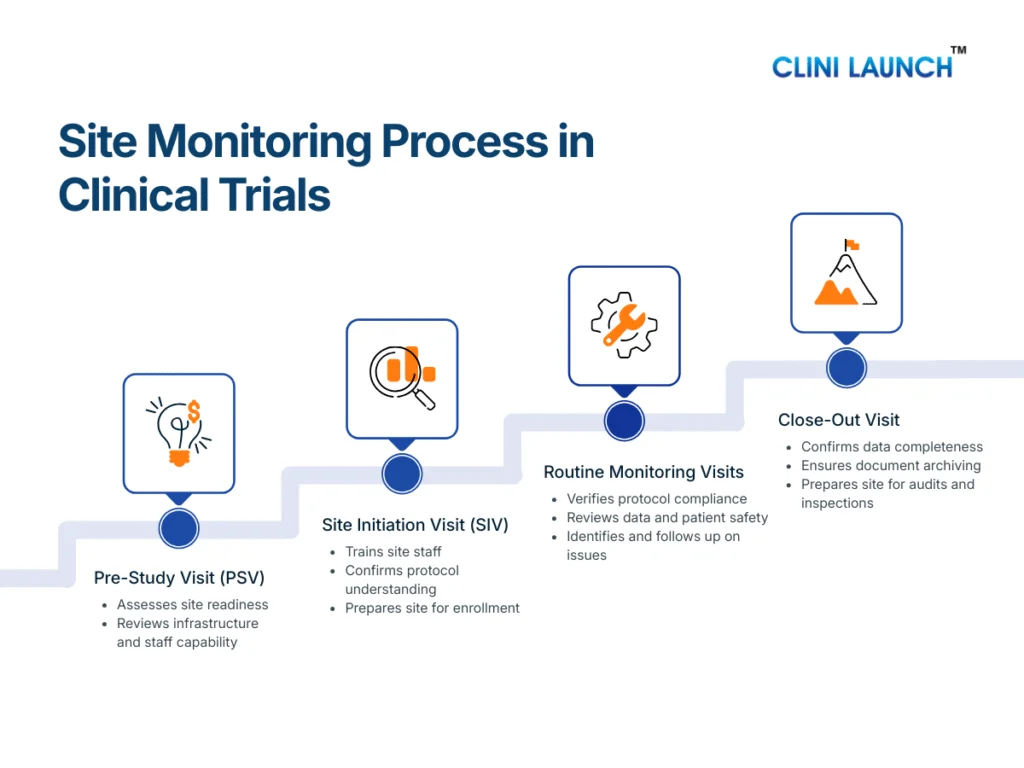
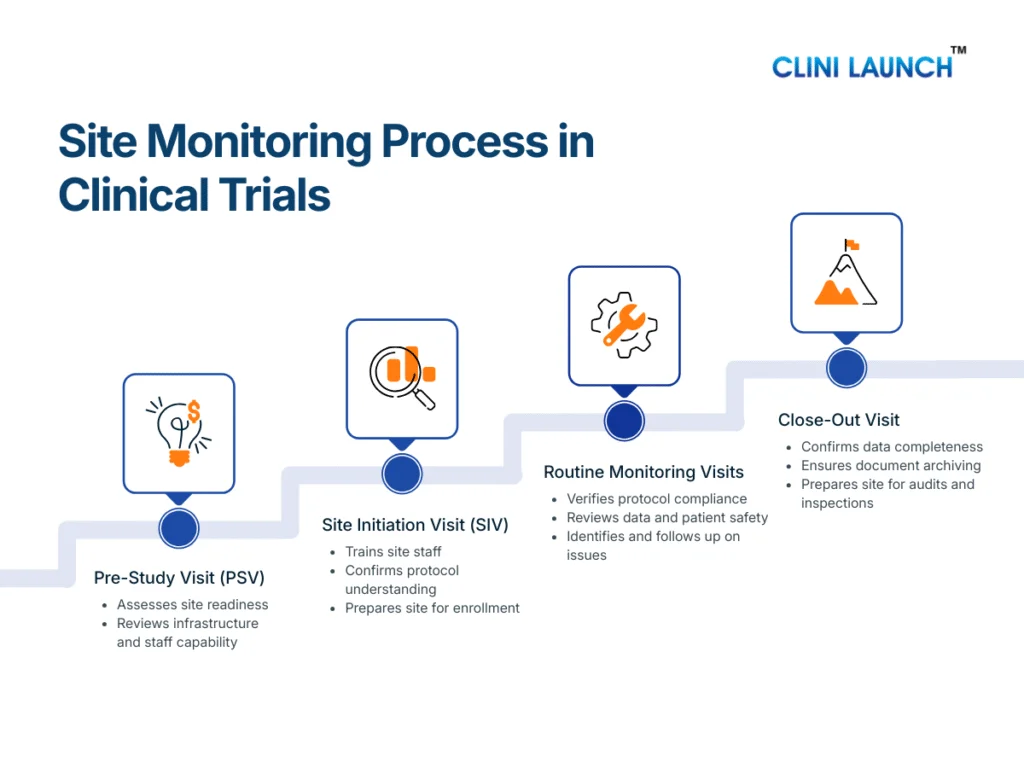
The site monitoring process in clinical trials follows a structured sequence of visits conducted across the study lifecycle. Each stage serves a distinct purpose, but together they ensure protocol compliance, patient safety monitoring, and data integrity from study start to closure. 

The Clinical Research Associate is responsible for planning, executing, documenting, and following up on these monitoring activities as part of ongoing clinical trial oversight. 

The Pre-Study Visit is conducted before a site is authorized to participate in a clinical trial. Its primary objective is to assess whether the site is capable of conducting the study in accordance with the protocol and regulatory requirements. 

During the PSV, the CRA evaluates the site’s infrastructure, including clinical facilities, investigational product storage areas, and data handling systems. The qualifications and experience of the investigator and site staff are reviewed to ensure they are appropriate for the study. The CRA also assesses whether the site can manage essential documents, adverse event reporting, and patient records in a compliant manner. 

This visit plays a preventive role. By identifying gaps early, the CRA can guide the site on corrective actions before trial initiation, reducing the risk of compliance issues later in the study. 
What is site monitoring

The Site Initiation Visit formally marks the transition from site preparation to active trial conduct. At this stage, the CRA ensures that the site fully understands the study requirements and is ready to enroll participants. 

During the SIV, the CRA reviews the approved protocol in detail with the site team, explaining study objectives, eligibility criteria, visit schedules, and safety reporting expectations. Training is provided on informed consent procedures, data entry into the EDC system, and handling of investigational products. The CRA also confirms that all essential documents are in place and that the site monitoring plan is clearly understood. 

A well-executed SIV establishes consistency in trial conduct and reduces the likelihood of protocol deviations during enrollment and follow-up. 

Routine monitoring visits are conducted at regular intervals throughout the trial and represent the core of site monitoring in clinical trials. These visits allow the CRA to verify that the study continues to be conducted as approved. 

During routine monitoring visits, the CRA reviews participant eligibility, confirms that informed consent was obtained correctly, and monitors patient safety through adverse event reporting. Data entered into the CRF or EDC system is compared with source documents as part of source data verification. The CRA also reviews the Investigator Site File to ensure that essential documents remain current and complete. 

Any issues identified during these visits are documented as monitoring findings. The CRA works with the site to resolve these issues and, where necessary, supports corrective and preventive actions to prevent recurrence. 

The Close-Out Visit is conducted once all trial activities at the site have been completed. The purpose of this visit is to ensure that the site has fulfilled all protocol, regulatory, and documentation requirements before the study is formally closed. 

During the close-out visit, the CRA confirms that all data queries have been resolved and that the study data is complete and accurate. Essential documents are reviewed to ensure proper archiving, and regulatory compliance is verified. The CRA also ensures that investigational products are returned or destroyed according to the protocol and applicable regulations. 

This final monitoring stage ensures that the site is prepared for audits or inspections and that the study can progress confidently toward analysis and reporting.  

This case illustrates how effective site monitoring in clinical trials directly protects data quality and scientific validity. 

During a routine monitoring visit, the Clinical Research Associate observed that a study participant scheduled for a Day 5 visit arrived nearly two hours later than planned. Despite the delay, the site staff proceeded with dosing and pharmacokinetic (PK) or pharmacodynamic (PD) sample collection without documenting the deviation or questioning its impact. 

At first glance, the situation appeared operationally minor. However, in clinical trials involving PK or PD assessments, sample timing is critical. Even small deviations can significantly affect data interpretation. 

When the CRA later reviewed the source documents, a serious discrepancy became evident. The visit was documented as if it had occurred exactly according to the protocol-defined schedule. There was no record of the delayed arrival, no protocol deviation reported, and the PK or PD sample times were recorded based on planned rather than actual collection times. 

This meant that the recorded data did not accurately reflect what occurred at the site. Because PK analyses depend on precise timing relative to dosing, the inaccurate documentation had the potential to distort the participant’s concentration profile and compromise the scientific integrity of the dataset. 

Having directly observed the deviation, the CRA escalated the issue to the Principal Investigator and the sponsor. The CRA ensured that the source documents were corrected to reflect the actual visit and sample collection times and that a formal protocol deviation was documented. 

In addition, the CRA supported corrective and preventive actions. These included targeted protocol and GCP retraining for the site staff and the introduction of a checklist to reinforce real-time documentation during critical visits. These actions were aimed at preventing similar issues in future visits. 
What is site monitoring

Because the issue was identified and addressed promptly, inaccurate PK data was prevented from entering the final analysis. The CRA’s intervention preserved the reliability of the study data and supported regulatory compliance. 

This case highlights the value of routine monitoring visits and demonstrates how vigilant site monitoring helps protect patient safety, data integrity, and overall trial credibility. It also reinforces why site monitoring is a critical safeguard rather than a procedural formality. 

Site monitoring is one of the most operationally critical functions in clinical trials. It is where protocol design, regulatory expectations, and real-world site execution intersect. Understanding how site monitoring works—across different monitoring types and visit stages—provides a practical view of how clinical trials are actually controlled and safeguarded. 

For individuals looking to enter clinical research, this knowledge is not optional. Roles such as Clinical Research Coordinator, Clinical Trial Assistant, and Clinical Research Associate all require a working understanding of site monitoring, protocol compliance, essential documentation, and patient safety oversight. 

At CliniLaunch Research Institute, the PG Diploma in Clinical Research is designed to build this exact operational understanding. The program focuses on real clinical trial workflows, including site monitoring processes, CRA responsibilities, regulatory compliance, and inspection readiness—preparing learners to function confidently in entry-level and growing clinical research roles. 

For those aiming to move from academic knowledge to industry-ready capability, structured training aligned with real trial operations makes the difference. 

The sponsor, often with input from the CRO, defines the site monitoring plan. This plan outlines the monitoring approach, visit frequency, and responsibilities based on study risk and complexity. 

Yes. Some form of site monitoring is required for all interventional clinical trials. The method may vary, but oversight of site activities is always expected by regulators. 

In some studies, monitoring may rely more on remote or centralized methods. However, critical activities such as informed consent and investigational product handling usually still require on-site verification at some stage. 

Unresolved monitoring findings can lead to protocol deviations, regulatory observations, delayed approvals, or rejection of trial data during inspections. 

Monitoring findings are recorded in a monitoring visit report. The site is required to respond, and corrective and preventive actions are tracked until closure. 

No. Site monitoring is a routine oversight activity. Audits and regulatory inspections are independent reviews conducted by sponsors or authorities to assess overall compliance. 

The CRA leads monitoring activities, but investigators and site staff are responsible for correcting issues and maintaining compliance at the site. 

Most academic programs focus on theory, while site monitoring involves operational decision-making, documentation control, and real-time risk management that are learned through practice. 

Imagine spending years discovering protein or weeks on data analysis for a clinical trial. This delay could set research back by years.  

Today, the life sciences industry is being transformed by advanced tools that streamline research, clinical trials, bioinformatics, and healthcare management. For instance, AlphaFold has predicted over 200 million protein structures in 2023, revolutionizing how researchers approach drug discovery and disease understanding. Meanwhile, platforms like Medidata and Oracle Clinical manage over 36,000 clinical trials, cutting down study build times from 12 weeks to just a few days, dramatically improving the speed and efficiency of clinical trials. 

Despite the availability of these tools for life science industry, there is a growing shortage of professionals skilled in their use. According to recent surveys, 85% of life sciences companies report difficulty finding skilled employees in bioinformatics, AI, machine learning, and data analytics. These skills are vital for making sense of the vast amounts of data generated in genomics, clinical research, and drug development. 

As the demand for professionals proficient in tools like BLAST, SAS, GraphPad Prism, TensorFlow, and LIMS rises, so do the career opportunities. The need for specialized training has never been more critical, as these tools continue to shape the future of healthcare, research, and medical advancements. 

Clinical trials and research are fundamental to advancing medical science and bringing new therapies to market. The tools used in these processes are vital in ensuring the integrity, efficiency, and regulatory compliance of studies. Below, we will break down each of the key tools for life science industry involved in clinical research management software: 

Medidata is a unified clinical‑trial software platform that supports electronic data capture (EDC), data management, patient experiences, and trial analytics. It’s hugely adopted — powering over 36,000 clinical trials, involving 11 million+ patients, across more than 2,300 customers globally, and was used in 72% of the FDA’s novel drug approvals in 2024. 

Category Medidata 
What It Does Medidata is a cloud-based platform for clinical trial data management
Who Uses This Clinical Data Managers, Clinical Research Associates (CRA), EDC Programmers, Systems Analysts 
How to Learn the Tool Learn through Medidata Academy, Coursera, or edX courses. Practice by building databases and automating trial workflows. 
Why Learn Medidata Learning Medidata, a leading EDC platform, can bring you closer to your career goals, as 27% of clinical trials are now using EDC systems to streamline data management and improve efficiency. 

Oracle Clinical is a robust clinical trial management system that is widely used by pharmaceutical and biotechnology companies for managing clinical trial data, ensuring compliance with regulatory standards like 21 CFR Part 11 (U.S. FDA regulations for electronic records). Oracle reports that 28 of the top 30 pharmaceutical companies worldwide rely on Oracle’s clinical systems, reflecting its widespread adoption in the industry. 

Category Oracle Clinical 
What It Does Oracle Clinical is a comprehensive data management system software for streamlining clinical trial data collection, validation, and analysis. 
Who Uses This Clinical Data Managers, Clinical Research Associates (CRA), Clinical Data Analysts 
How to Learn the Tool Learn through Oracle’s official training, Coursera, or edX courses. Practice by automating trial processes and validating data. 
Why Learn Oracle Clinical Oracle Clinical is integral to managing complex clinical data, ensuring regulatory compliance, and improving data accuracy, making professionals highly sought after. 

Veeva Vault is a cloud-based software platform used for managing clinical trial documents, ensuring regulatory compliance, and improving operational efficiency. It is trusted by over 1,500 life-science organizations globally. Veeva Vault is a leader in document and quality management for clinical trials and has been recognized for streamlining document access and enhancing collaboration. 

Category Veeva Vault 
What It Is Veeva Vault is a document management software that centralizes clinical trial documentation and improves collaboration. 
Who Uses This Clinical Documentation Managers, Regulatory Affairs Specialists, Clinical Research Associates 
How to Learn the Tool Veeva Vault is mostly learned on the job through hands-on experience. Training is available via Veeva’s platform or industry partners, but it’s typically specific to the company and role. 
Why Learn Veeva Vault Proficiency in Veeva Vault is valuable for clinical roles, ensuring compliance, audit readiness, and efficient document management. 

PhlexTMF is a cloud‑based electronic Trial Master File (eTMF) platform used by pharmaceutical companies and CROs worldwide. This document management software is designed to centralize and manage clinical trial documentation, ensuring regulatory compliance and audit readiness. It streamlines the storage, access, and collaboration of critical trial documents in real-time. Users report a 16% reduction in document‑processing time and a 95% accuracy rate, thanks to its AI‑powered automation. 

Category PhlexTMF 
What It Is PhlexTMF is a document‑management software for centralizing and managing clinical trial documentation. 
Who Uses This Clinical Documentation Managers, Regulatory Affairs Specialists, Trial Master File (TMF) Managers 
How to Learn the Tool Training modules and eLearning are offered by Phlexglobal; however, PhlexTMF is primarily learned on the job through hands-on experience. 
Why Learn PhlexTMF Proficiency in PhlexTMF opens career opportunities in Clinical Documentation and Regulatory Affairs — and with its AI‑enabled tooling, you’ll be working in a highly in‑demand, future‑oriented software. 

Clincase is an innovative e‑clinical solution used globally for managing clinical trials. It has supported 100,000+ subjects and been deployed in 400+ studies across 20+ countries, showcasing its extensive reach and proven capability. Compliant with FDA 21 CFR Part 11, EU GMP Annex 11, ICH-GCP, and GDPR, CLIN case is trusted by pharmaceutical companies and CROs worldwide to ensure regulatory compliance and trial integrity. 

Category Clincase 
What It Is A clinical trial management software that automates randomization, reduces errors, and improves efficiency. 
Who Uses This Clinical Research Associates (CRA), Clinical Trial Managers, Data Analysts
How to Learn the Tool On-the-job training and hands-on experience. 
Why Learn Clincase Key for roles in trial design, management, and data analysis, enhancing career prospects in clinical research. 

Pharmacovigilance is critical for monitoring the safety of drugs and ensuring public health. The tools used in pharmacovigilance are essential for detecting adverse drug reactions (ADRs), managing safety data, and complying with regulatory standards. Below, we break down the key pharmacovigilance tools used in the life sciences industry: 

These tools support effective adverse event reporting, signal detection, and regulatory compliance, ensuring the safe use of medications. Here are the list of tools for life science industry used in the pharmacovigilance sector. 

MedWatch is the FDA’s adverse event reporting system, allowing healthcare professionals, manufacturers, and consumers to report issues related to medical products, including drugs and devices. It ensures timely action on safety risks. The FDA receives over 2 million reports annually related to medical devices, highlighting its crucial role in public health safety. 

Category MedWatch 
What It Is The FDA’s system for reporting adverse events and safety issues in medical products. 
Who Uses This Healthcare professionals, pharmaceutical companies, medical device manufacturers, and consumers. 
How to Learn the Tool Online training and resources provided by the FDA; learned through healthcare practice. 
Why Learn MedWatch fundamental tool for pharmacovigilance and regulatory roles, critical for ensuring patient safety and complianc 

ArisGlobal is a global leader in pharmacovigilance, supporting 220+ life-sciences companies and government health authorities. With 57 go-lives in 2024 and a 23% YoY increase, it is at the forefront of drug safety. Their Generative AI upgrade boosts 90% data-extraction accuracy and 65% intake-efficiency improvement, automating workflows and enhancing signal detection to ensure better patient safety and compliance. 

Category ArisGlobal (LifeSphere) 
What It Is A comprehensive pharmacovigilance and regulatory‑operations platform for managing adverse‑event reporting and safety data. 
Who Uses This Pharma companies, CROs, regulatory affairs specialists, drug‑safety professionals, PV teams. 
How to Learn the Tool Online training, hands‑on practice, implementation of projects in safety/regulatory workflows. 
Why Learn ArisGlobal Opening pathways into drug‑safety, signal‑detection, regulatory‑affairs and AI‑enabled PV careers. 

MedDRA (Medical Dictionary for Regulatory Activities) is a standardized medical terminology used globally for classifying adverse event data in clinical trials and post-marketing surveillance. It provides a consistent framework for coding and reporting medical conditions, symptoms, and side effects. MedDRA is the global standard for adverse event coding and is used in over 100 countries for regulatory reporting, ensuring data consistency across regions. 

Category MedDRA 
What It Is A standardized medical terminology for classifying adverse event data in clinical trials and post-market surveillance. 
Who Uses This Regulatory agencies, clinical researchers, pharmaceutical companies, and CROs. 
How to Learn the Tool Online training and resources from the MedDRA Maintenance and Support Services Organization (MSSO). 
Why Learn MedDRA Essential for regulatory reporting, signal detection, and ensuring data consistency in clinical research and safety monitoring. 

Oracle Argus Safety is a widely used, industry-proven pharmacovigilance system for managing adverse events and regulatory reporting. With over 10 million cases processed annually, it is trusted by 400+ customers globally. Argus Safety handles more than 70% of drug ICSRs in the FDA’s FAERS database and over 90% of vaccine ICSRs in the FDA’s VAERS database, making it a leading solution in drug safety and regulatory compliance worldwide. 

Category Oracle Argus Safety 
What It Is A pharmacovigilance system for managing adverse events and regulatory reporting. 
Who Uses This Pharmaceutical companies, CROs, regulatory affairs specialists, and pharmacovigilance professionals. 
How to Learn the Tool Online training, webinars, and hands-on experience in pharmacovigilance and regulatory affairs. 
Why Learn Oracle Argus Safety Vital for roles in drug safety, signal detection, and regulatory compliance, enhancing career opportunities in pharmacovigilance. 

Signal™ by ArisGlobal is a cutting-edge tool for signal detection, monitoring, and risk management in pharmacovigilance. With 80% faster signal assessment, it enables physicians to evaluate safety signals significantly quicker compared to traditional methods. The tool also reduces false positives by 40-50%, enhancing accuracy and efficiency through advanced analytics. Signal™ seamlessly integrates with other systems, reducing IT overhead and complexity, making it an indispensable solution for proactive safety monitoring and regulatory compliance. 

Category Signal™ by ArisGlobal 
What It Is A tool for signal detection, monitoring, and risk management in pharmacovigilance. 
Who Uses This Pharmaceutical companies, CROs, pharmacovigilance professionals, and regulatory affairs specialists. 
How to Learn the Tool Online training, webinars, and hands-on experience in pharmacovigilance and risk management. 
Why Learn Signal™ key for professionals involved in signal detection, risk management, and regulatory compliance in pharmacovigilance.

OpenClinica is an open‑source clinical trial data management platform with integrated pharmacovigilance (PV) functionalities. It has powered over 15,000 studies and supported more than 3 million patients worldwide, establishing a strong track record in clinical data capture and research.  

Category OpenClinica 
What It Is An open‑source clinical trial data management platform with pharmacovigilance support. 
Who Uses This Clinical researchers, data managers, pharmaceutical companies, CROs, and academic institutions. 
How to Learn the Tool Online training, documentation, hands‑on trial workflows and integration exercises. 
Why Learn OpenClinica Ideal for professionals in clinical data management, regulatory compliance, and pharmacovigilance roles. 

Medrio is a clinical trial management and data‑capture platform (CDMS/EDC) with built‑in pharmacovigilance tools, supporting real‑time data access, safety‑event tracking, and streamlined trial workflows. It is trusted globally, being used in over 9,500 trials in 100 countries and capturing data from more than 1 million participants.  

Category Medrio 
What It Is A clinical trial management system (CDMS/EDC) with integrated safety/PV functionality. 
Who Uses This Clinical researchers, data managers, pharmaceutical companies, CROs, PV professionals. 
How to Learn the Tool Online training, documentation, hands‑on trial implementations, on‑the‑job practice. 
Why Learn Medrio An essential tool in clinical data management, trial operations, safety‑reporting and pharmacovigilance. 

Here is the list of life science tools used in the statistical and data analysis sector. 

R is a widely-used programming language for statistical analysis, data visualization, and scientific computing. It’s a powerful tool in data science, bioinformatics, and clinical research, known for its extensive libraries and packages for statistical computing. According to Tiobe Index 2025, R programming is one of the global top 10 programming languages.

Category R Programming 
What It Is A programming language and environment for statistical computing, data analysis and visualization. 
Who Uses This Data scientists, statisticians, bioinformaticians, clinical researchers, and data analysts. 
How to Learn the Tool Online courses, tutorials, hands‑on projects, and practical data‑analysis work in RStudio or similar environments. 
Why Learn R Learning R opens up career opportunities in data science, analytics, biostatistics, and clinical research — particularly valuable when dealing with large, complex datasets and visualization tasks. 

SPSS (Statistical Package for the Social Sciences) is a widely used software suite for statistical analysis in social sciences, healthcare, and clinical research. It offers powerful tools for data management, advanced analytics, and hypothesis testing, making it essential for researchers and analysts across various fields. According to tech‑stack usage data, SPSS is used by approximately 37,531 companies globally.

Category SPSS 
What It Is A software suite for statistical analysis and data management. 
Who Uses This Social scientists, healthcare researchers, market analysts, and clinical researchers. 
How to Learn the Tool Online tutorials, formal training programs, and practical analysis projects. 
Why Learn SPSS Essential for researchers and analysts in social sciences, healthcare, and clinical studies to conduct in-depth statistical analysis. 

Minitab is a statistics software package designed for data analysis and process improvement. Widely used in quality control, manufacturing, and research, Minitab helps professionals analyze data, identify trends, and improve processes through statistical methods. Over 90% of the Fortune 100 companies use Minitab Statistical Software, making it a popular statistical software package.

Category Minitab 
What It Is A statistics software package for data analysis and process improvement. 
Who Uses This Data analysts, quality control specialists, manufacturing engineers, and researchers. 
How to Learn the Tool Online resources, webinars, and hands-on training programs. 
Why Learn Minitab Key for professionals in quality control, process optimization, and manufacturing who need powerful statistical tools. 

MATLAB is a high-level numerical computing environment used for data analysis, algorithm development, and data visualization. The software has an estimated user base of over 4 million users globally. It is particularly popular in academia and industries such as engineering, finance, and healthcare for solving complex mathematical problems. 

Category MATLAB 
What It Is A numerical computing environment for data analysis, algorithm development, and visualization. 
Who Uses This Engineers, researchers, data scientists, and analysts in fields like finance, physics, and healthcare. 
How to Learn the Tool Online courses, documentation, and hands-on programming projects. 
Why Learn MATLAB Ideal for professionals in engineering, finance, and research fields where numerical computation and algorithm design are key. 

Pandas and NumPy are two of the most widely used libraries in Python for data manipulation and analysis. Pandas simplify data handling with powerful data structures, while NumPy offers robust capabilities for numerical computing, both crucial for data scientists and analysts. Python remains the dominant language for data science work: in the JetBrains survey ~48% of Python developers said they engage in data exploration/processing. 

Category Python Libraries (pandas, NumPy) 
What It Is Python libraries for data manipulation (pandas) and numerical computing (NumPy). 
Who Uses This Data scientists, analysts, engineers, and researchers. 
How to Learn the Tool Online tutorials, documentation, and coding exercises. 
Why Learn pandas & NumPy Crucial for data manipulation, numerical analysis, and building machine learning models in data science. 

Bioinformatics software tools are essential for analyzing and interpreting vast amounts of biological data, driving innovations in genomics, drug discovery, and personalized medicine. These tools help researchers identify genetic variations, analyze protein structures, and manage complex datasets. Below, we break down the key bioinformatics tools used in the life sciences industry: 

The bioinformatics tools list given are vital for sequence alignment, data analysis, protein structure prediction, and genomic research. Here is the list of tools for the life science industry in the bioinformatics sector. 

BLAST (Basic Local Alignment Search Tool) is a widely used tool for comparing nucleotide or protein sequences to identify similarities in biological data. It is essential for tasks like sequence alignment and gene identification. BLAST is used in over 60% of genomic research publications that involve sequence comparisons.  

Category BLAST 
What It Is A tool for sequence alignment and similarity comparison of nucleotide/protein sequences. 
Who Uses This Bioinformaticians, researchers in genomics, and molecular biologists. 
How to Learn the Tool Online tutorials, documentation, and hands-on sequence analysis. 
Why Learn BLAST Fundamental for genomic research and bioinformatics, especially for sequence alignment and functional annotation. 

Galaxy is an open-source platform that allows users to run bioinformatics workflows and analyze large biological datasets. Galaxy has over 500,000 users across the world. It provides a user-friendly interface for complex bioinformatics tasks, widely used in genomics, transcriptomics, and systems of biology. 

Category Galaxy 
What It Is An open-source platform for running bioinformatics workflows and analyzing biological data. 
Who Uses This Bioinformaticians, computational biologists, and researchers in genomics and systems biology. 
How to Learn the Tool Online courses, workshops, and community-driven resources on the Galaxy platform. 
Why Learn Galaxy Essential for managing and analyzing large-scale biological datasets and automating bioinformatics workflows. 

R/Bioconductor is a package for the R programming language used to analyze genomic data, including microarray and NGS (next-generation sequencing) data. Bioconductor hosts over 1,500 open-source R packages for bioinformatics, with over 200,000 downloads per month. It provides tools for statistical analysis and visualization of genomic datasets.  


Category R/Bioconductor 
What It Is A package for genomic data analysis, including microarray and NGS data analysis. 
Who Uses This Bioinformaticians, data scientists, and computational biologists. 
How to Learn the Tool Online tutorials, courses, and Bioconductor documentation. 
Why Learn R/Bioconductor Vital for those working with high-throughput genomic data and for performing advanced statistical analysis. 

PyMOL is a molecular visualization system that allows users to view 3D structures of biological molecules. It is widely used in structural biology, protein science, and drug design. PyMOL is used by over 5,000 research institutions worldwide. 

Category PyMOL 
What It Is A molecular visualization tool for viewing 3D structures of biological molecules. 
Who Uses This Structural biologists, biochemists, and researchers in drug discovery. 
How to Learn the Tool Online tutorials, PyMOL documentation, and hands-on visualization exercises. 
Why Learn PyMOL Essential for understanding molecular structures, protein-ligand interactions, and drug design. 

TensorFlow is an open-source AI library used for machine learning and deep learning, including applications in life sciences like genomics, drug discovery, and medical imaging. TensorFlow has been downloaded over 50 million times and is one of the most popular libraries for machine learning. 

Category TensorFlow 
What It Is An open-source library for machine learning and deep learning. 
Who Uses This Data scientists, AI researchers, and bioinformaticians. 
How to Learn the Tool Online courses, TensorFlow documentation, and hands-on deep learning projects. 
Why Learn TensorFlow Essential for building machine learning models, particularly in genomics, drug discovery, and medical imaging. 

AlphaFold is an AI-based tool developed by DeepMind for predicting protein folding and structure from amino acid sequences. AlphaFold achieved over 90% accuracy in predicting protein structures, outperforming traditional methods. It has revolutionized the field of structural biology by accurately predicting 3D protein structures. 

Category AlphaFold 
What It Is An AI-based tool for predicting protein folding and structure from amino acid sequences. 
Who Uses This Structural biologists, bioinformaticians, and researchers in drug discovery. 
How to Learn the Tool Explore DeepMind’s AlphaFold resources and tutorials on protein structure prediction. 
Why Learn AlphaFold A groundbreaking tool for predicting protein structures and advancing research in drug discovery and disease understanding. 

As the life sciences industry evolves, students are increasingly becoming statisticians, coders, and analysts, bridging the gap between biology and technology. The demand for professionals who can analyze vast amounts of biological and clinical data is enormous. Life science tools like R, Python, SAS, and others are at the core of this transformation, making proficiency in these technologies essential for success. 

At CliniLaunch, we equip you with the relevant tools for the roles that matter most in today’s life sciences industry. Learning these tools not only opens doors to a wide range of career opportunities in bioinformatics, clinical research, and drug development, but it also places students at the forefront of the data-driven revolution in healthcare. As the industry continues to grow, professionals skilled in data analysis and coding will be in high demand, making it an exciting time for life science students to gain expertise in these powerful tools. 

CDISC Data Standards to Improve Data Quality in 2025

The standardization of data format has become crucial, and the Clinical Data Interchange Standards Consortium CDISC is committed to enhancing medical research. As data management and analysis are essential data standardization is crucial to ensure the validity and accuracy of crucial findings and results. The complexity in clinical trials requires greater collaboration between the different individuals involved in the case study.   

CDISC data standards have collaborated with the FDA to establish data standards, which make it easier for regulatory reviewers to comprehend and process clinical trial data. This blog explores the importance of why CDISC data standards have become essential for clinical trials, highlighting its advantages and impact on the capability of medical research.   


Enroll Now: Clinical SAS course 

During clinical research, the Clinical Data Interchange Standards Consortium (CDISC) is a global non-profit organization that expands universal standards for collecting data. Previously CDISC began, the absence of standardization of data made submission to regulatory agencies and sharing details globally become extremely difficult and extensive with delays from acceptance to agreement. CDISC standards were developed in response to the evolving needs to coordinate data formats and facilitate communication between different individuals like clinical trial sponsors and regulatory bodies.  

The data standards developed by CDISC can be coordinated into four key categories:  

  • Basic: For defining data standards, CDISC refers to the basic standards as the core principles. The primary standards include all content such as clinical and non-clinical data, models, domains, questionnaires, scales, and ratings (QRS).  
  • Terminology: Within basics and therapeutic area standards, CDSIC terminology is an explanation created to offer standardized naming conventions for expressions or values.   
  • Data Exchange: These standards are generated to facilitate data sharing across diverse information systems, including those that have not enacted the basic CDISC in clinical research.  
  • Therapeutic Areas: This is a series of user guides (TAUGS) for therapeutic areas that serve as specified extensions for the basic standards.   

These supplies will establish four standards within CDISC basic standards and offer insights into their implementation.   

The SDTM in clinical trials are possibly the most well-recognized and widely enacted CDISC standard. It summarizes a global standard for how to structure and build content for data sets for individual clinical study data, while the Standard for Exchange of Nonclinical Data (SEND) is an implementation of SDTM clinical trials that offers the same structure to nonclinical data. SDTM and SEND are essential in the Food and Drug Administration (FDA) in the United States and the Pharmaceuticals and Medical Devices Agency (PMDA) in Japan requires SDTM.  

Furthermore, for defining each segment of data as a domain the SEND and SDTM in clinical trials are essential. It enables the people reviewing the data to find the details they need with limited to no-study understanding. These domains offer structure to all data, including highly specialized fields like pharmacokinetics. 


Read our blog in the topic of Promising 15 Branches of Pharmacology in Clinical Research

CDISC in clinical trials provides benefits such as enhancing the processes among stakeholders by offering a standardized framework, also optimized audits and regulatory approvals. Also, it mitigates risks and costs, while improving quality and gaining customer trust.  

Enhancement of Processes 

  • Clinical Data Interchange Standards Consortium CDISC plays a significant role in enabling cooperation among diverse stakeholders in the clinical research sector such as sponsors, regulatory authorities, researchers, CROs, and more. CDISC allows smooth and effective communication between these individuals by establishing standards that ensure clear and balancing data. 
  • This cooperative approach improves transparency and trust among the involved parties but also contributes to the overall efficiency of health product development like medicines by allowing faster and more informed decision-making. 
  • Companies can build a reputation for reliability, trust, and transparency by demonstrating a commitment to rigorous data collection, exchange, and analysis practices. As investors are more likely to support projects that demonstrate a solid methodological foundation, this can be particularly important when seeking funding or partnerships.  
  • CDISC is a crucial catalyst for more integrated and interconnected clinical research.  
  • From the beginning of a clinical research project, review and audit processes are considerably accelerated when data are rendered CDISC-compliant.  
  • Auditors and regulatory reviewers can more easily hold the data because the structure of the data remains identical between each study.  This enables them to easily navigate the datasets and comprehend the methodology used, thus reducing the time required to familiarize themselves with the data and study, and mitigating the time spent reviewing the data.      
  • This enables teams to concentrate on examining results rather than preparing documents for audits, thereby increasing overall project efficiency.   
  • CDISC data standards application also has a crucial impact on speeding up regulatory approval processes for clinical trials. 
  • The combination of the FDA and PMDA has made the CDISC standards mandatory for regulatory submissions. It makes it easy for manufacturers to comprehend and be experts in these standards. 
  • CDISC enables the submission of reports to regulatory agencies by providing uniform standards for the presentation of clinical data. These standards allow sponsors to structure their data consistently and in line with regulatory requirements, mitigating the risk of returns or requests for clarification from agencies. 
  • For efficient communication between researchers and regulators, CDISC supports mitigate review times and promotes faster decision-making on the approval of new treatments. 

  1. Enhanced data quality 
  • By utilizing CDISC standards it ensures better integration and explanation of information from different sources, also mitigating data errors and inconsistencies. 
  • Scientists can ensure that data is presented in a clear and consistent way with the help of standardized formats like SDTM and Analysis Data Model (ADaM) and significantly enhancing transparency. 
  • For enactment of CDISC formats has an opening cost (staff training, changes of existing collection standards, data mapping transformation) the impact on mitigating following costs and delays linked to data management remains significant. 
  • CDISC streamlines data management processes by using coordinating standards right from the collection stage, through to data management and analysis. This interprets for some errors and inconsistencies and mitigating the time needed for data cleansing and validation.  
  • Additionally, the utilization of standardized and consequently compatible formats enabling the integration of data from different sources and systems, by speeding up the overall workflow and enhancing operational efficiency.  
  • The combination of CDISC standards allows better risk management throughout the clinical trial. Teams can more quickly analyze potential problems like data errors or non-conformities with standardized processes and well-structured data.  
  • Proactive risk management means that remedial action can be put in place quickly, minimizing the impact on the project and ensuring that the trial stays on track.

Adopting CDISC standards in clinical trials presents notable challenges. Primarily, it often necessitates a complete overhaul of data collection processes, such as modifying questionnaires. Furthermore, a lack of understanding and familiarity with CDISC among research teams can lead to implementation errors, jeopardizing data quality. Resistance to change from teams and stakeholders also impedes effective adoption.  

To address these, comprehensive training, coaching, and clear communication are crucial. Ongoing training on this evolving format is essential, and companies must invest in it and appropriate technology to fully grasp CDISC’s impact. Early collaboration with experts is a key strategy, as the path to CDISC standardization, while requiring effort, ultimately delivers significant time and resource optimization. 

Conclusion 

The Clinical Data Interchange Standards Consortium (CDISC) is pivotal in modern clinical research. By standardizing data formats, CDISC data standards addresses the growing complexity of trials and the need for seamless collaboration among stakeholders. Adopting CDISC enhances process efficiency, accelerates regulatory reviews, improves data quality, and reduces risks and costs. While implementation presents challenges, including the need to modify data collection processes and ensure team training, the long-term benefits of CDISC compliance are undeniable. Ready to streamline your clinical trials? 

Clinilaunch Research offers expert solutions to help you navigate the complexities of CDISC in clinical research and ensure the success of your clinical research. Contact us today to learn more about our services and how we can support your journey. 

CDISC (Clinical Data Interchange Standards Consortium) data standards are a set of globally recognized formats for collecting, managing, and exchanging data in clinical trials. They are crucial because they facilitate better collaboration, streamline regulatory reviews by agencies like the FDA and PMDA, enhance data quality and consistency, and ultimately accelerate the drug development process. 

The blog highlights four key categories of CDISC data standards: Basic (core principles including models and questionnaires), Terminology (standardized naming conventions), Data Exchange (standards for sharing data across different systems), and Therapeutic Areas (specific extensions for different disease areas). 

SDTM clinical trials is a widely adopted CDISC standard that provides a global framework for structuring and organizing data sets from individual clinical studies. It’s essential because regulatory agencies like the FDA and PMDA require it for submissions, enabling reviewers to easily understand and navigate study data, even without in-depth study-specific knowledge. 

The blog outlines several benefits, including enhanced cooperation among stakeholders, faster review and audit processes, accelerated regulatory approvals, improved data quality and consistency, mitigation of data management costs and delays, and robust risk management throughout the clinical trial lifecycle. 

The main challenges include the need for a complete overhaul of existing data collection processes (like modifying questionnaires), a lack of understanding and familiarity with CDISC among research teams leading to errors, and resistance to change. These challenges can be overcome through comprehensive and ongoing training, effective coaching, clear communication strategies, investing in appropriate technological tools, and collaborating with CDISC experts from the early stages of clinical development. 

A guide to CDISC standards used in clinical research 

What Is CDISC and What Are CDISC Data Standards? 

CDISC: Towards successful clinical trials! 

https://efor-group.com/en/cdisc-towards-successful-clinical-trials

TABLE OF CONTENTS 

Step 1: Hyper-Targeting with Precision Data 

Step 2: Omnichannel Recruitment Strategies 

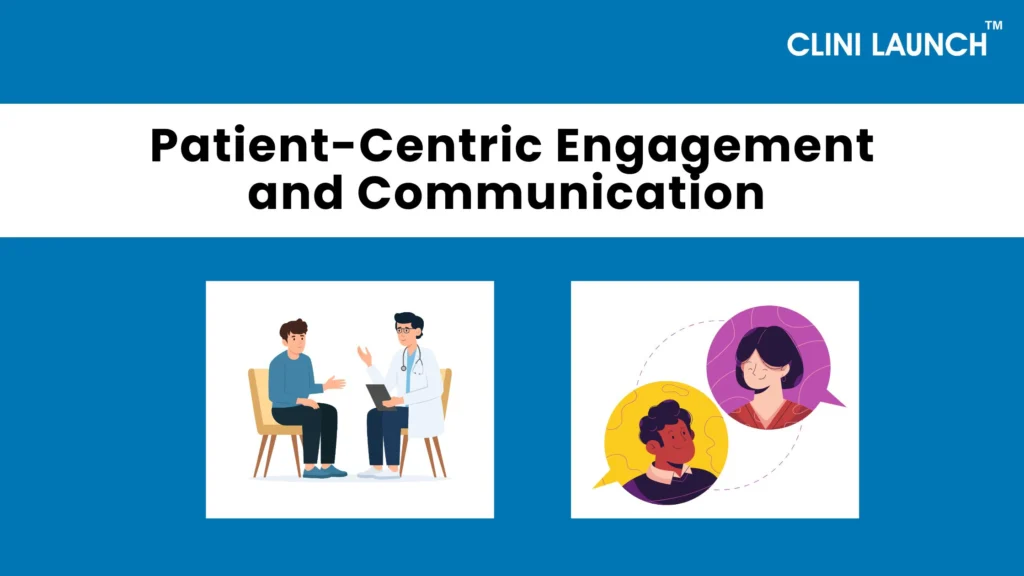
Step 3: Patient-Centric Engagement and Communication 

Step 4: Data-Driven Monitoring and Optimization 

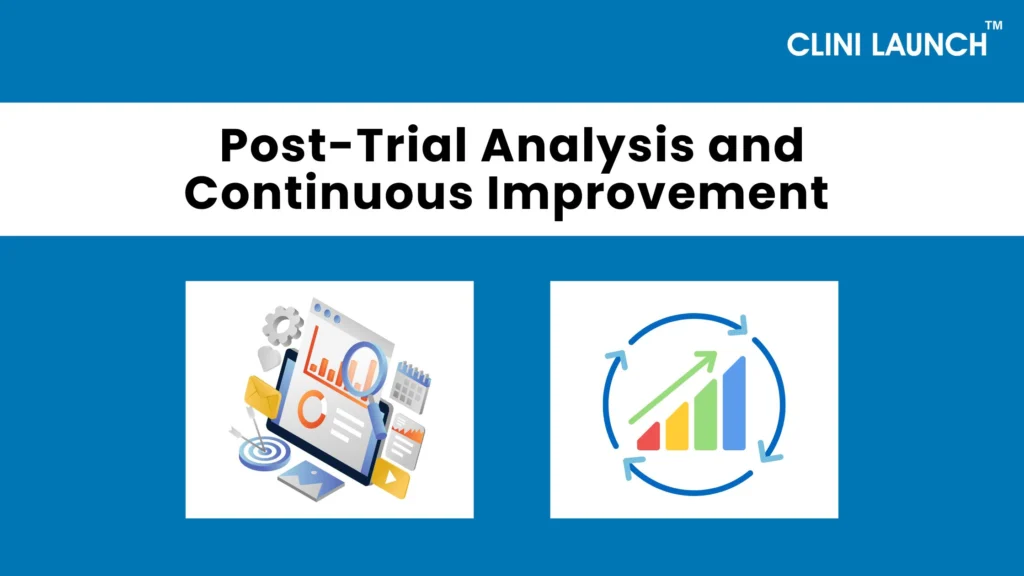
Step 5: Post-Trial Analysis and Continuous Improvement 

Conclusion 

In clinical research, 2025 marks a pivotal point, where the intersection of advanced technology and evolving patient expectations is reshaping drug development. With the increasing complexity of clinical trials and the growing demand for personalized medicine, the clinical trial recruitment process has become more critical than ever. Studies indicate that delays in patient enrollment can extend trial timelines by months, even years, leading to significant financial burdens and delayed access to potentially life-saving therapies. In this dynamic environment, a proactive and data-driven approach is essential for successful recruitment.  

This blog aims to provide a comprehensive blueprint, outlining five key strategies that will revolutionize patient recruitment in clinical trials, ensuring efficiency, inclusivity, and ultimately, improved patient outcomes. 


Learn Clinical Trial Recruitment Process. Click here Clinical Research 

The days of casting a wide net for clinical trial participants are over in 2025. The future of effective patient recruitment in clinical trials lies in hyper-targeting, a strategy that leverages the power of precision data to identify ideal candidates. This involves utilizing advanced analytics tools to explore through vast datasets, including real-world data (RWD), electronic health records (EHRs), and genomic data. By analyzing these data sources, researchers can pinpoint patients with specific genetic markers, lifestyle factors, or comorbidities that align with the trial’s inclusion and exclusion criteria. 

The benefits of this approach are manifold. Precision matching not only increases enrollment rates by targeting individuals who are more likely to be eligible and interested in participating, but also improves the quality of data collected, leading to more robust and reliable trial results. Moreover, the integration of artificial intelligence (AI) and machine learning (ML) algorithms allows for predictive modeling, forecasting patient eligibility and interest with unprecedented accuracy. These technologies can identify patterns and correlations that are beyond human capabilities, enabling researchers to streamline the recruitment process and minimize delays. Therefore, to how to improve patient recruitment in clinical trials is to leverage the power of hyper-targeting. 

For example, imagine a clinical trial for a novel gene therapy targeting a rare genetic disorder. By analyzing genomic data from patient registries and EHRs, researchers can identify individuals with specific genetic mutations and contact them directly. This targeted approach significantly reduces the time and resources required for recruitment, while also ensuring that the trial population is representative of the patient population. 

In 2024, Phase I clinical trials started with 2368, phase II clinical trials started with 1764, and phase III clinical trials started with 1356. 

Reaching out patients in 2025 requires a multi-faceted approach leveraging a variety of digital and traditional channels. The modern patients are digital savvy and engage with healthcare information across various online platforms. Therefore, for a comprehensive CRO recruitment strategy, contract research organizations must encompass and must encompass an omnichannel approach. 

Digital strategies include targeted social media campaigns, engaging online patient communities and forums, utilizing telemedicine for remote screening, and optimizing trial-related content for search engines (SEO). Social media platforms like Facebook, Instagram, and LinkedIn offer powerful targeting tools allowing CRO patient recruitment strategies to reach specific patient demographics and interests. Online patient communities provide a space for individuals with shared medical conditions to connect and share information, making them valuable resources for recruitment. Telemedicine and remote screening options expand the geographic reach of trials, making participation more accessible to patients in remote areas. 

Traditional strategies, such as physician referrals and community outreach, remain vital. Building strong relationships with healthcare providers who can identify and refer eligible patients is essential. CRO patient recruitment strategies include partnering with local healthcare centers, clinics, and community organizations allowing them to engage with diverse patient populations. Collaborating with patient advocacy groups can help build trust and credibility, as these groups are often trusted sources of information for patients. 

When working with Contract Research Organizations (CROs), it’s crucial to ensure they employ diverse strategies. Understanding CRO patient recruitment strategies is vital to optimize the patient recruitment process in clinical trials. The seamless integration of digital and traditional channels is essential for maximizing reach and engagement. 

Recently, patients are more informed and empowered, demanding transparency, and personalized experiences. CROs patient recruitment strategies suggest building trust and fostering engagement for successful recruitment. To achieve this, researchers must adopt a patient-centric approach that prioritizes the patient’s needs and preferences. 

This includes simplifying the enrollment process by minimizing paperwork and offering online enrollment options. Personalized communication, tailored to individual patient needs, can address concerns and provide ongoing support. Providing comprehensive education about the clinical trial recruitment process, including its purpose, risks, and benefits, in a language that is easy to understand, is essential for building trust. Offering virtual trial options and remote participation can minimize patient burden and enhance accessibility. 

Gathering and acting on patient feedback is also crucial for continuous improvement. Researchers should implement feedback mechanisms, such as surveys and interviews, to understand patient experiences and identify areas for improvement. Ethical considerations, such as informed consent and data privacy, must be carefully addressed throughout the recruitment process. 

To truly how to improve patient recruitment in clinical trials, we have to focus on the patient journey and how we can make the experience better. 

Continuous monitoring and data analysis are essential for optimizing the clinical trial recruitment process. By tracking key performance indicators (KPIs), such as enrollment rates, time to enrollment, and patient retention, researchers can identify bottlenecks and implement timely adjustments. 

Advanced analytics platforms provide real-time insights into recruitment performance, allowing for data-driven decision-making. A/B testing of recruitment materials and strategies enables the identification of the most effective approaches. Regularly reporting and dashboards provide stakeholders with clear visibility into recruitment progress. 

Leveraging data to understand patient attrition and identify factors influencing dropout rates is crucial for improving retention. Implementing proactive strategies to address these factors can significantly enhance trial completion rates. 

Recruitment team can fix the strategy real-time with data driven insights responding to shifts in patient interest or availability. This agility improves recruitment success and speeds up the trial process itself.  

The final step in optimizing the clinical trial recruitment process is to conduct a thorough post-trial analysis. This involves evaluating the effectiveness of recruitment strategies, identifying areas for improvement, and documenting best practices. 

Post-trial surveys and interviews provide valuable insights into patient experiences and preferences. Analyzing recruitment data helps identify successful strategies and areas for refinement. Sharing best practices within the clinical research community fosters collaboration and innovation. 

In 2025, continuous improvement is paramount. Trial sponsors must stay abreast of emerging technologies and trends, adapting their recruitment strategies to meet the evolving needs of patients and the healthcare ecosystem. By focusing on how to improve patient recruitment in clinical trials, we pave the way for medical breakthroughs that benefit humanity as a whole. 


Read our recent blog post on Cryptography in Cybersecurity: A Comprehensive Guide | 2025  

In essence, optimizing the clinical trial recruitment process for 2025 and beyond requires a strategic shift towards hyper-targeting through precision data, omnichannel recruitment, patient-centric engagement, real-time data monitoring, and continuous improvement. By embracing these data-driven and patient-focused strategies, we can significantly enhance efficiency, inclusivity, and ultimately, accelerate medical breakthroughs, paving the way for a more robust and patient-centered clinical research landscape. By focusing on these five key steps, we can ensure that the patient recruitment process in clinical trials is optimized to meet the challenges and opportunities of the future.  

Ready to revolutionize your approach to clinical trial recruitment and stay ahead in the evolving healthcare landscape? Discover innovative strategies and advanced insights to enhance your professional growth. Visit CliniLaunch Research today to access transformative courses and resources that will empower you to excel in the future of clinical research. 

  1. 5 Key Strategies for Clinical Trial Patient Recruitment https://www.proximacro.com/news/5-key-strategies-for-clinical-trial-patient-recruitment  
  1. 5 Ways to Improve Patient Recruitment in Clinical Trials in 2025 https://www.patiro.com/insights/5-ways-to-improve-patient-recruitment-in-clinical-trials-in-2025 
  1. How 7 Steps Transform Clinical Trial Recruitment https://schedule-call.apexmedicalresearch.com/post/how-7-steps-transform-clinical-trial-recruitment   

Introduction 

Pharmacology is undergoing a seismic shift, driven by groundbreaking advancements in biologics, gene therapy, and artificial intelligence (AI). As we peer into the next five years, these converging forces promise to revolutionize drug discovery, development, and patient care. Explore transformative trends in this blog while delving deep into the exciting possibilities and challenges that lie ahead, while also contextualizing them within the broader framework of branches of pharmacology. 

Enroll now: Clinical Research 

Biologics, complex medications derived from living organisms, have already made a profound impact on treating various diseases, from cancer to autoimmune disorders. In the next five years, we can expect to see increased accuracy and personalization. Biologics are becoming increasingly targeted, focusing on specific molecular pathways involved in disease. This trend will lead to more personalized treatments, maximizing efficacy while minimizing side effects. Monoclonal antibodies, for instance, are being engineered with greater accuracy to target specific cancer cell receptors.  

Additionally, the expansion of therapeutic areas is evident as biologics move beyond traditional areas like oncology and immunology. We’ll see advancements in areas like neurology, cardiology, and metabolic diseases. For example, gene-edited stem cells are being explored for treating heart failure. The biosimilar market will continue to grow, offering more affordable alternatives to expensive originator biologics. Improved manufacturing processes and regulatory pathways will facilitate biosimilar development.  

Finally, innovative delivery systems, such as microneedle patches and implantable devices, will enhance patient convenience and improve drug bioavailability. This is especially important for biologics, which are often administered through injection. 

Pharmacology

Gene therapy, the revolutionary approach of modifying genes to treat or prevent disease, is poised to become a mainstream therapeutic modality. Within the next five years, CRISPR-Cas9 technology will continue to be refined, enabling more precise and efficient gene editing. This will pave the way for treating a wider range of genetic disorders. Viral vectors, used to deliver therapeutic genes, will become safer and more efficient. Advancements in vector design and production will reduce immunogenicity and improve gene delivery.  

Gene therapy is moving beyond rare genetic diseases to address more common conditions, such as cancer, cardiovascular disease, and neurodegenerative disorders. For example, gene therapies are being developed to enhance immune cell function in cancer immunotherapy. Advances in genomics and bioinformatics will enable personalized gene therapy approaches, tailoring treatments to individual patient genetic profiles. As gene therapy becomes more prevalent, ethical and regulatory frameworks will need to evolve to address issues like germline editing and equitable access. 

Artificial intelligence (AI) is transforming every aspect of pharmacology, from drug discovery to clinical trials. In the next five years, AI algorithms will accelerate drug discovery by analyzing vast datasets to identify potential drug targets and predict drug efficacy and toxicity. Machine learning models will be used to design novel drug molecules with improved properties. AI will optimize clinical trial design, patient recruitment, and data analysis. This will lead to faster and more efficient clinical trials, reducing the time and cost of drug development.  

AI will enable personalized medicine by integrating patient data from various sources, such as genomics, proteomics, and electronic health records. This will allow for tailoring drug therapies to individual patients’ needs. AI will enhance pharmacovigilance by analyzing real-world data to detect and predict adverse drug reactions. This will improve drug safety and patient outcomes. AI can rapidly analyze existing drug databases to identify new therapeutic uses for approved drugs, accelerating the development of new treatments. 

Bristol Myers Squibb significantly improved drug metabolism prediction by using a machine learning model to assess CYP450 enzyme inhibition, achieving 95% precision and reducing potential drug development failures. 


To better understand the implications of these changes, it’s crucial to examine them within the context of the various branches of pharmacology. The study of pharmacology is not monolithic; it encompasses a wide range of specialized areas. Pharmacokinetics focuses on how the body absorbs, distributes, metabolizes, and eliminates drugs. In the context of biologics, pharmacokinetics studies the complex absorption and distribution of large molecules. AI is aiding in the prediction of pharmacokinetic parameters. For example, studying the absorption of a monoclonal antibody after subcutaneous injection.  

Pharmacodynamics explores the mechanisms of drug action, including how drugs interact with receptors and produce their effects. Gene therapies directly impact pharmacodynamics by altering gene expression and protein function. For example, investigating how a gene therapy vector modifies the expression of a target protein in cancer cells.  

Pharmacogenetics/Pharmacogenomics examines how genetic variations influence drug response. Personalized medicine, driven by AI, relies heavily on pharmacogenomics to tailor drug therapies. For example, using genetic testing to predict a patient’s response to a specific antidepressant.  

Clinical pharmacology focuses on the safe and effective use of drugs in humans. AI is transforming clinical trials by optimizing patient selection and data analysis. For example, conducting a clinical trial to evaluate the efficacy of a new gene therapy for cystic fibrosis.  

Toxicology studies the adverse effects of drugs and other chemicals. AI is enhancing toxicological studies by predicting drug toxicity and identifying potential safety concerns. For example, using AI to analyze preclinical data and predict the potential hepatotoxicity of a new drug candidate.  

Neuropharmacology investigates the effects of drugs on the nervous system. Biologics and gene therapy are making significant strides in treating neurological disorders. For example, developing a gene therapy to deliver neurotrophic factors to treat Parkinson’s disease. 

Cardiovascular pharmacology focuses on the effects of drugs on the cardiovascular system. Gene therapy and biology are being explored for treating cardiovascular diseases. For example, investigating the use of gene-edited stem cells to repair damaged heart tissue after a myocardial infarction.  

Immunopharmacology studies the effects of drugs on the immune system. Biologics, such as monoclonal antibodies and immunomodulators, are key tools in immunopharmacology. For example, developing a monoclonal antibody to block the activity of a pro-inflammatory cytokine in rheumatoid arthritis.  

Chemotherapy focuses on the use of drugs to treat cancer. Biologics and gene therapy are revolutionizing cancer treatment. AI is accelerating the discovery of new cancer therapies. For example, using Chimeric Antigen Receptor (CAR) T-cell therapy to target and destroy cancer cells. Behavioral pharmacology investigates the effects of drugs on behavior and cognition.  

Neuropharmacology and behavioral pharmacology are closely related. For example, studying the effects of a new antidepressant on cognitive function and mood. 


These pharmacology branches are not isolated but rather interconnected. For example, pharmacokinetics and pharmacodynamics are fundamental to understanding drug action in any therapeutic area. Pharmacogenomics influences drug response in all branches. AI is a cross-cutting technology that is transforming all aspects of pharmacology. 

While the future of pharmacology is bright, several challenges need to be addressed. Biologics and gene therapies are often expensive, limiting patient access. The development and approval of new therapies require rigorous regulatory processes. Gene therapy and AI raise ethical concerns that need careful consideration. AI-driven personalized medicine requires the secure handling of sensitive patient data.  

Effectively integrating biologics, gene therapy, and AI requires collaboration among scientists, clinicians, and engineers. Despite these challenges, the opportunities are immense. By embracing these transformative technologies, we can accelerate the development of new therapies, improve patient outcomes, and usher in a new era of personalized medicine. 

In the next five years, the convergence of biology, gene therapy, and artificial intelligence will fundamentally reshape the field of pharmacology. These technologies, when applied across the diverse branches of pharmacology, hold the potential to revolutionize drug discovery, personalize treatment approaches, and significantly improve patient lives. While challenges related to cost, regulation, ethics, and data security remain, the potential benefits are undeniable. As we continue to refine these technologies and foster interdisciplinary collaboration, the future of pharmacology promises to be one of unprecedented innovation and progress, ushering in a new era of more effective and personalized healthcare. 

This rapidly evolving landscape demands continuous learning and adaptation for professionals across healthcare and related fields. If you’re eager to stay at the forefront of these advancements and understand how they impact your career and personal life, CliniLaunch offers valuable resources and courses designed to empower you with the knowledge and skills needed to thrive in this dynamic environment. Explore our Clinical Research program today and discover how you can leverage these advanced technologies to enhance your professional growth and contribute to the future of healthcare. 

AI is set to revolutionize drug discovery by analyzing vast datasets to identify potential drug targets and predict drug efficacy and toxicity. Machine learning algorithms will be used to design novel drug molecules with improved properties, significantly accelerating the drug development process and reducing costs. 

The primary ethical concerns surrounding gene therapy include the potential for germline editing, which could have unintended and heritable consequences, and issues of equitable access due to the high costs associated with these treatments. Regulatory frameworks are evolving to address these concerns, focusing on safety, efficacy, and ethical considerations, and discussions are ongoing regarding equitable access. 

Biologics are becoming increasingly targeted, focusing on specific molecular pathways involved in disease. This trend will lead to more personalized treatments, maximizing efficacy while minimizing side effects. Advances in areas like monoclonal antibody engineering and personalized medicine will allow for tailoring biologics to individual patient needs based on their unique molecular profiles. 

Biosimilars are highly similar, but not identical, versions of originator biologics. They offer more affordable alternatives to expensive biology, increasing patient access to these life-changing treatments. The biosimilar market is expected to grow significantly in the next 5 years, driven by improved manufacturing processes and regulatory pathways. 

Understanding the various branches of pharmacology, such as pharmacokinetics, pharmacodynamics, pharmacogenomics, and clinical pharmacology, provides a framework for analyzing how these advancements impact different aspects of drug action and patient care. It helps us see how AI optimizes clinical trials (clinical pharmacology), how gene therapy alters drug mechanisms (pharmacodynamics), and how personalized medicine relies on genetic information (pharmacogenomics). This contextual understanding is essential for navigating the complex interplay between these emerging technologies and the core principles of pharmacology. 


Q&A: Prepare for the Future of the AI in 2025 

https://www.pharmacytimes.com/view/q-a-prepare-for-the-future-of-the-ai-in-2025

The future of pharmaceuticals: Artificial intelligence in drug discovery and development 

https://www.sciencedirect.com/science/article/pii/S2095177925000656


In 2025, global medical costs are projected to rise at an average rate of 10.4%


Clinical Knowledge

The rapid pace of healthcare innovations is directly linked to the expansion of clinical knowledge. Breakthroughs in genomics, proteomics, and personalized medicine are made possible by a deeper understanding of disease mechanisms and individual patient variability. 

1. Personalized Medicine:  


    • Advances in genomics have enabled the development of targeted therapies that are tailored to an individual’s genetic makeup. 

    • This approach, driven by clinical knowledge, allows for more precise and effective treatments, minimizing adverse effects and improving patient outcomes. 


    • AI and ML algorithms are trained on vast datasets of clinical knowledge, enabling them to assist in diagnosis, treatment planning, and drug discovery.

    • These technologies can analyze complex medical images, identify patterns in patient data, and predict disease progression, enhancing the accuracy and efficiency of healthcare delivery. 


    • The ability to deliver clinical knowledge and expertise remotely has transformed healthcare access, particularly for patients in underserved areas. 

    • Telehealth platforms allow for virtual consultations, remote monitoring of chronic conditions, and timely interventions, improving patient engagement and adherence to treatment plans. 


    • Robotic surgery is a great example of healthcare innovations. This technology allows for greater accuracy during surgery and allows for less invasive procedures. This technology is built on the strong foundation of clinical knowledge. 


Average per-worker health benefit costs for employers are expected to climb 5.8% in 2025


healthcare innovations

As we approach 2025, the future of healthcare will be characterized by several key trends, all of which are underpinned by the advancement of clinical knowledge. 


    • Advances in diagnostic technologies and a deeper understanding of disease risk factors will enable earlier detection and intervention. 

    • Clinical knowledge will play a crucial role in developing personalized prevention strategies and promoting healthy lifestyles. 


    • The focus will shift from fragmented care to integrated models that prioritize holistic patient well-being. 

    • Clinical knowledge will facilitate seamless communication and collaboration among healthcare professionals, ensuring coordinated and patient-centered care.


    • Electronic health records (EHRs) and big data analytics will provide valuable insights into patient populations and treatment outcomes. 

    • Clinical knowledge will be essential for interpreting and applying this data to improve clinical practice and inform policy decisions. 


    • Telehealth and digital health solutions will expand access to quality healthcare, particularly for underserved populations. 

    • Clinical knowledge will be disseminated through digital platforms, empowering patients to take an active role in their health management. 


    • Data analysis, and machine learning will allow for faster research. 

    • This rapid research will allow for faster development of new medications, and treatments. This is a vital part of the future of healthcare by 2025. 


U.S. health spending has risen from $2.8 trillion in 2012 to $4.5 trillion in 2022 and is expected to hit $7.7 trillion by 2032


    • Nurses rely on clinical knowledge to assess patient needs, identify potential complications, and make informed decisions about patient care. 

    • This includes the ability to interpret vital signs, recognize subtle changes in patient condition, and prioritize interventions. 


    • Nurses must have a thorough understanding of pharmacology, pharmacokinetics, and pharmacodynamics to administer medications safely and effectively. 

    • Clinical knowledge is essential for calculating dosages, monitoring drug interactions, and educating patients about medication adherence. 


    • Nurses play a vital role in educating patients about their health conditions, treatment plans, and self-care strategies. 

    • Clinical knowledge empowers nurses to provide accurate and evidence-based information, empowering patients to make informed decisions about their health. 


    • Nurses use current research to improve patient care. 

    • This is a vital part of clinical knowledge in nursing. 


    • Nurses must adapt to new technology. 

    • This requires nurses to have a strong foundation of clinical knowledge. 


Read our recent blog post on Clini Launch – Empowering Students for Success in the Healthcare Job Market  


In a rapidly evolving healthcare landscape, continuous learning is essential for healthcare professionals. 


    • Healthcare professionals must commit to ongoing education and professional development to stay abreast of the latest advancements. 

    • This includes attending conferences, workshops, and seminars, as well as engaging in self-directed learning. 


    • Online databases, medical journals, and digital learning platforms provide access to a wealth of clinical knowledge.

    • Healthcare professionals should leverage these resources to enhance their knowledge and skills. 


    • Collaborative learning environments, such as interprofessional teams and peer-to-peer discussions, facilitate the exchange of clinical knowledge and promote critical thinking. 

    • The sharing of information, and the discussion of cases improves the overall clinical knowledge of the group. 


    • Simulation labs, and practical experience are vital to improving clinical knowledge. 

    • These real-world experiences allow for the application of learned information. 


Enroll now: Clinical Research Course


your ultimate guide to key healthcare skills in 2025 

https://www.randstadusa.com/job-seeker/skills/top-skills-healthcare-2025/#section-title-423642

Key steps toward optimizing transformation in healthcare in 2025 

https://www.healthcareitnews.com/blog/key-steps-toward-optimizing-transformation-healthcare-2025

Introduction :

The healthcare landscape is in a state of continuous evolution, driven by advancements in technology, research, and a growing understanding of human health. As we look towards the future of healthcare by 2025, one element stands out as the cornerstone of progress: clinical knowledge. This comprehensive understanding of diseases, treatments, and patient care is not merely a static body of information; it’s a dynamic and ever-expanding field that fuels healthcare innovations and shapes the very fabric of modern medicine. In this blog, we’ll delve into the critical role of clinical knowledge in shaping the future of healthcare, exploring its impact on patient care, technology, and the essential role of clinical knowledge in nursing

The Essence of Clinical Knowledge :

At its core, clinical knowledge represents the synthesis of scientific evidence, practical experience, and evolving best practices. It encompasses a broad spectrum of information, including: 

  • Disease pathology and pathophysiology 
  • Pharmacology and therapeutics 
  • Diagnostic procedures and interpretation 
  • Patient assessment and management 
  • Evidence-based practice guidelines 
  • Ethical considerations in healthcare 

This knowledge is not confined to textbooks or research papers; it’s continuously refined through clinical practice, research studies, and the collective wisdom of healthcare professionals. 

In 2025, global medical costs are projected to rise at an average rate of 10.4%
Clinical Knowledge


The rapid pace of healthcare innovations is directly linked to the expansion of clinical knowledge. Breakthroughs in genomics, proteomics, and personalized medicine are made possible by a deeper understanding of disease mechanisms and individual patient variability. 

1. Personalized Medicine:

  • Advances in genomics have enabled the development of targeted therapies that are tailored to an individual’s genetic makeup.
  • This approach, driven by clinical knowledge, allows for more precise and effective treatments, minimizing adverse effects and improving patient outcomes. 

2. Artificial Intelligence (AI) and Machine Learning (ML):

  • AI and ML algorithms are trained on vast datasets of clinical knowledge, enabling them to assist in diagnosis, treatment planning, and drug discovery.
  • These technologies can analyze complex medical images, identify patterns in patient data, and predict disease progression, enhancing the accuracy and efficiency of healthcare delivery. 

3. Telehealth and Remote Patient Monitoring:

  • The ability to deliver clinical knowledge and expertise remotely has transformed healthcare access, particularly for patients in underserved areas. 
  • Telehealth platforms allow for virtual consultations, remote monitoring of chronic conditions, and timely interventions, improving patient engagement and adherence to treatment plans. 

4. Robotic Surgery:

  • Robotic surgery is a great example of healthcare innovations. This technology allows for greater accuracy during surgery and allows for less invasive procedures. This technology is built on the strong foundation of clinical knowledge. 
Average per-worker health benefit costs for employers are expected to climb 5.8% in 2025

The Future of Healthcare by 2025: A Clinical Knowledge-Driven Vision

healthcare innovations

As we approach 2025, the future of healthcare will be characterized by several key trends, all of which are underpinned by the advancement of clinical knowledge. 

1. Preventive Care and Early Intervention:

  • Advances in diagnostic technologies and a deeper understanding of disease risk factors will enable earlier detection and intervention. 
  • Clinical knowledge will play a crucial role in developing personalized prevention strategies and promoting healthy lifestyles. 

2. Integrated and Patient-Centered Care:

  • The focus will shift from fragmented care to integrated models that prioritize holistic patient well-being. 
  • Clinical knowledge will facilitate seamless communication and collaboration among healthcare professionals, ensuring coordinated and patient-centered care.

3. Data-Driven Decision Making:

  • Electronic health records (EHRs) and big data analytics will provide valuable insights into patient populations and treatment outcomes. 
  • Clinical knowledge will be essential for interpreting and applying this data to improve clinical practice and inform policy decisions. 

4. Increased Accessibility and Equity:

  • Telehealth and digital health solutions will expand access to quality healthcare, particularly for underserved populations. 
  • Clinical knowledge will be disseminated through digital platforms, empowering patients to take an active role in their health management. 

5. Rapid Research and Development:

  • Data analysis, and machine learning will allow for faster research. 
  • This rapid research will allow for faster development of new medications, and treatments. This is a vital part of the future of healthcare by 2025. 
U.S. health spending has risen from $2.8 trillion in 2012 to $4.5 trillion in 2022 and is expected to hit $7.7 trillion by 2032

1. Clinical Judgment and Decision Making:

  • Nurses rely on clinical knowledge to assess patient needs, identify potential complications, and make informed decisions about patient care. 
  • This includes the ability to interpret vital signs, recognize subtle changes in patient condition, and prioritize interventions. 
  •  

2. Medication Administration and Management:

  • Nurses must have a thorough understanding of pharmacology, pharmacokinetics, and pharmacodynamics to administer medications safely and effectively. 
  • Clinical knowledge is essential for calculating dosages, monitoring drug interactions, and educating patients about medication adherence. 
  •  

3. Patient Education and Advocacy:

  • Nurses play a vital role in educating patients about their health conditions, treatment plans, and self-care strategies. 
  • Clinical knowledge empowers nurses to provide accurate and evidence-based information, empowering patients to make informed decisions about their health. 
  •  

4. Evidence-Based Practice:

  • Nurses use current research to improve patient care. 
  • This is a vital part of clinical knowledge in nursing. 
  •  

5. Adapting to Technological Advancements:

Nurses must adapt to new technology. 

  • This requires nurses to have a strong foundation of clinical knowledge. 
  •  
  • Clinical Research 
  • Bioinformatics 
  • Medical Coding 
  • Clinical SAS 
  • Biostatistics 
  • AI and ML in Healthcare 
  • Medical Scribe 
  • NCLEX-RN 
  • MBA in Heathcare 

We focus on core competencies such as: 

  • In-depth practical knowledge 
  • Exposure to live capstone projects 
  • Personalized coaching and mentoring 
  • Industry-specific knowledge and certifications 
  • Learn advance tools and techniques  
  • Attend webinars on recent topics and learn from industry experts  
  • Personalize resume building and interview preparation 


  • Cutting-edge knowledge in emerging healthcare fields 
  • Practical skills to apply in real-world scenarios 
  • Networking opportunities with top healthcare organizations 
  • Ongoing career support and guidance 

  1. https://teganalytics.com/now-hiring-iitians-top-reasons-why-teg-analytics-considers-to-hire-from-iits/ 
  1. https://pmc.ncbi.nlm.nih.gov/articles/PMC3043365/ Viraj Rajadhyaksha   


Patient Recruitment

Clinical Research Recruitment

Clinical Trial Patient Recruitment


  • Detect disease outbreaks and respond promptly. 
  • Identify risk factors for various health conditions. 
  • Evaluate the effectiveness of health interventions and policies. 
  • Develop data-driven public health strategies. 
  • Reduce health disparities in vulnerable communities. 

Objectives of Clinical Epidemiology: 

Disease surveillance is a fundamental aspect of public health that involves the ongoing collection, analysis, and interpretation of health data. The CDC defines surveillance as an essential tool for controlling infectious diseases. 

Public health agencies monitor diseases such as: 

  • Tuberculosis, STDs, and vaccine-preventable illnesses. 
  • Foodborne infections (e.g., Salmonella, E. coli). 
  • Emerging infectious diseases such as COVID-19. 

By employing advanced data integration methods, epidemiologists can track disease progression and implement timely interventions. 

Key areas of study include: 

  • Diabetes epidemiology 
  • Maternal and reproductive health 
  • Mental health epidemiology 
  • Musculoskeletal disorders 

Infectious diseases remain a significant public health concern. Infectious disease epidemiology aims to control and eliminate diseases caused by bacteria, viruses, and parasites. Research areas include: 

  • Pharmacoepidemiology and antimicrobial resistance. 
  • Clinical trials for vaccine development. 
  • Global health initiatives to prevent pandemics. 

Injury epidemiology studies unintentional injuries (e.g., motor vehicle crashes, burns) and intentional injuries (e.g., violence, suicides). Public health initiatives focus on: 

  • Violence prevention programs 
  • Occupational safety regulations 
  • Emergency response planning 

Advancements in molecular and genetic epidemiology have revolutionized disease prevention. Researchers study genetic markers and molecular pathways to understand disease susceptibility. 

Key areas include: 

  • Human genetics and genetic epidemiology 
  • Pharmacogenomics and precision medicine 
  • Nutritional epidemiology 

  • Expanding cohort studies across the lifespan. 
  • Integrating big data science into epidemiology. 
  • Developing advanced data integration methods. 
  • Enhancing public health policies through research. 

Epidemiology remains at the forefront of public health, guiding policies and interventions to improve global health outcomes. Through clinical epidemiology and global health research, biostatistics, and advanced data integration methods, epidemiologists continue to tackle some of the world’s most pressing health challenges. By pursuing public health courses such as an MPH (Master of Public Health), aspiring professionals can contribute to a healthier future for all. 

The transformation of epidemiology in the 21st century will depend on integrating traditional methods with innovative technology, ensuring a data-driven approach to disease prevention and health promotion.  

At CliniLaunch we provide in-depth learning sessions with detailed curriculum for PG Diploma in Biostatics course. To learn more about such informative topics and modules visit our website and enroll today. 


  1. https://www.frontiersin.org/research-topics/68501/advancing-chronic-disease-research-through-systems-epidemiology-and-computational-methods  
  1. https://pmc.ncbi.nlm.nih.gov/articles/PMC7310786/ 
  1. https://en.wikipedia.org/wiki/Clinical_epidemiology#:~:text=Clinical%20epidemiology%20is%20a%20subfield,basic%20science%20of%20clinical%20medicine%22 
  1. https://www.sciencedirect.com/topics/medicine-and-dentistry/disease-surveillance 
  1. https://aacrjournals.org/cebp/article/22/4/508/69870/Transforming-Epidemiology-for-21st-Century  

India’s clinical trials market has garnered significant global attention due to its rapid growth, providing immense opportunities for pharmaceutical and biotechnology firms. Forecasted to reach USD 1.42 billion in 2024 with a strong compound annual growth rate (CAGR) of 8.0% between 2025 and 2030, this expanding sector offers promising prospects. Key drivers fueling this growth include a vast and diverse population, progressive regulatory reforms, and a cost-efficient trial environment.

A significant factor enhancing Indian clinical trials market is its expansive network of highly skilled medical professionals, including doctors, researchers, and data scientists, ensuring that trials are conducted following international quality standards.


Read our blog post on "Top 5 Clinical Research Trends in Healthcare | 2025"

Creative Designed by Tezas Dhanakoti (video content creator at CliniLaunch)

India has become a preferred hub for clinical research owing to several strategic advantages. The country’s vast genetic diversity and population of over 1.3 billion offer a rich patient pool for a broad spectrum of clinical trial. This genetic variation provides critical data for developing therapies targeting various disease conditions.

Furthermore, the economic, ecological, and environmental variations across India contribute to diverse disease patterns, making it an ideal location for comprehensive clinical studies. For instance, non-communicable diseases (NCDs) like cardiovascular issues and diabetes have higher prevalence in southern states such as Kerala and Tamil Nadu compared to northern regions like Rajasthan and Bihar.

A recent example of India’s expanding clinical trial landscape is Eli Lilly and Company (India) Pvt. Ltd., which initiated Phase III trials for orforglipron, an anti-obesity drug. Additionally, the positive results from the SUMMIT Phase III trial for tirzepatide injection for heart failure patients underscore India’s diverse patient pool’s significance.

Favorable regulatory reforms have further solidified India’s position in global clinical research. These streamlined approval processes encourage international firms to conduct cost-effective, high-quality trials in the country.


Enroll for " Clinical Research Program"

Cost-Effectiveness: India’s Competitive Advantage

Creative Designed by Tezas Dhanakoti (video content creator at CliniLaunch)

India’s competitive edge in clinical trial lies in its cost-efficiency. Clinical trial expenses in India are approximately 50% lower than in the U.S. and Europe, significantly reducing research costs for global pharmaceutical companies. This financial advantage, combined with a large pool of trained professionals, makes India a prime destination for large-scale Phase III trials requiring diverse patient demographics.

Moreover, India’s established infrastructure, including state-of-the-art research facilities and expert investigators, ensures trials meet global compliance standards while maintaining budget efficiency.

Parallel to the expanding clinical trial sector, the clinical trial supplies market in India is also experiencing significant growth. Projected to grow from USD 2.70 billion in 2024 to USD 4.79 billion by 2033, this growth is driven by rising chronic disease prevalence, evolving regulatory norms, and the globalization of clinical research.

Technological advancements such as blockchain technology and IoT-based supply chain management are further transforming the efficiency and security of clinical trial supplies. These innovations ensure real-time tracking, secure data management, and reduced logistical delays.

India plays a crucial role in this market by adhering to standards set by the Central Drugs Standard Control Organization (CDSCO), ensuring compliance with global regulatory requirements.


The globalization of clinical trials has amplified the demand for efficient supply chain management, as pharmaceutical companies expand operations into emerging markets like India. This expansion requires streamlined logistics, advanced packaging solutions, and reliable delivery mechanisms to meet clinical trial timelines effectively.

India’s strategic geographical location, along with its robust clinical research capabilities, makes it an essential hub for global trials. The country’s infrastructure allows for the seamless distribution of clinical supplies, facilitating faster research progress.

Creative Designed by Tezas Dhanakoti (video content creator at CliniLaunch)

India’s clinical trial market has also contributed significantly to employment generation. More than 300,000 professionals, including clinical research associates, data managers, regulatory experts, and biostatisticians, are directly or indirectly involved in the industry. With the rising demand for clinical research, these numbers are expected to grow substantially in the coming years.

India’s regulatory reforms since 2013 have made a substantial impact in streamlining clinical trial approval processes. The Central Drugs Standard Control Organization (CDSCO) has introduced measures to reduce approval timelines and promote compliance with international standards.

Looking forward to 2025 and beyond, India’s clinical research sector is expected to emphasize pressing health challenges, including antimicrobial resistance (AMR), tuberculosis (TB), cancer, and non-communicable diseases (NCDs) such as diabetes and cardiovascular issues. Other focus areas include neonatal care, anemia management, and emergency response treatments.

The Indian Council of Medical Research (ICMR) plays a pivotal role in spearheading national health programs, facilitating advancements in diagnostics, treatment innovations, and public health initiatives.


Indian clinical trials market is on a steady growth trajectory, driven by cost-effectiveness, a vast and diverse patient pool, skilled medical expertise, and supportive government policies. As global clinical trial expand, India stands out as a critical player in accelerating drug development and advancing medical innovation.

With its ever-evolving infrastructure, strong compliance standards, and strategic focus on emerging health challenges, India remains a leading destination for global pharmaceutical companies seeking to conduct efficient, high-quality trials. Does the scope for employment in this field is going to grow immensely.

Unlock your career in clinical research today with Clinilaunch! Join now to gain hands-on expertise in clinical trials, data management, and regulatory compliance. Don’t miss the opportunity to become a part of this dynamic and fast-growing industry. Enroll today and take the first step towards becoming a clinical research expert!